

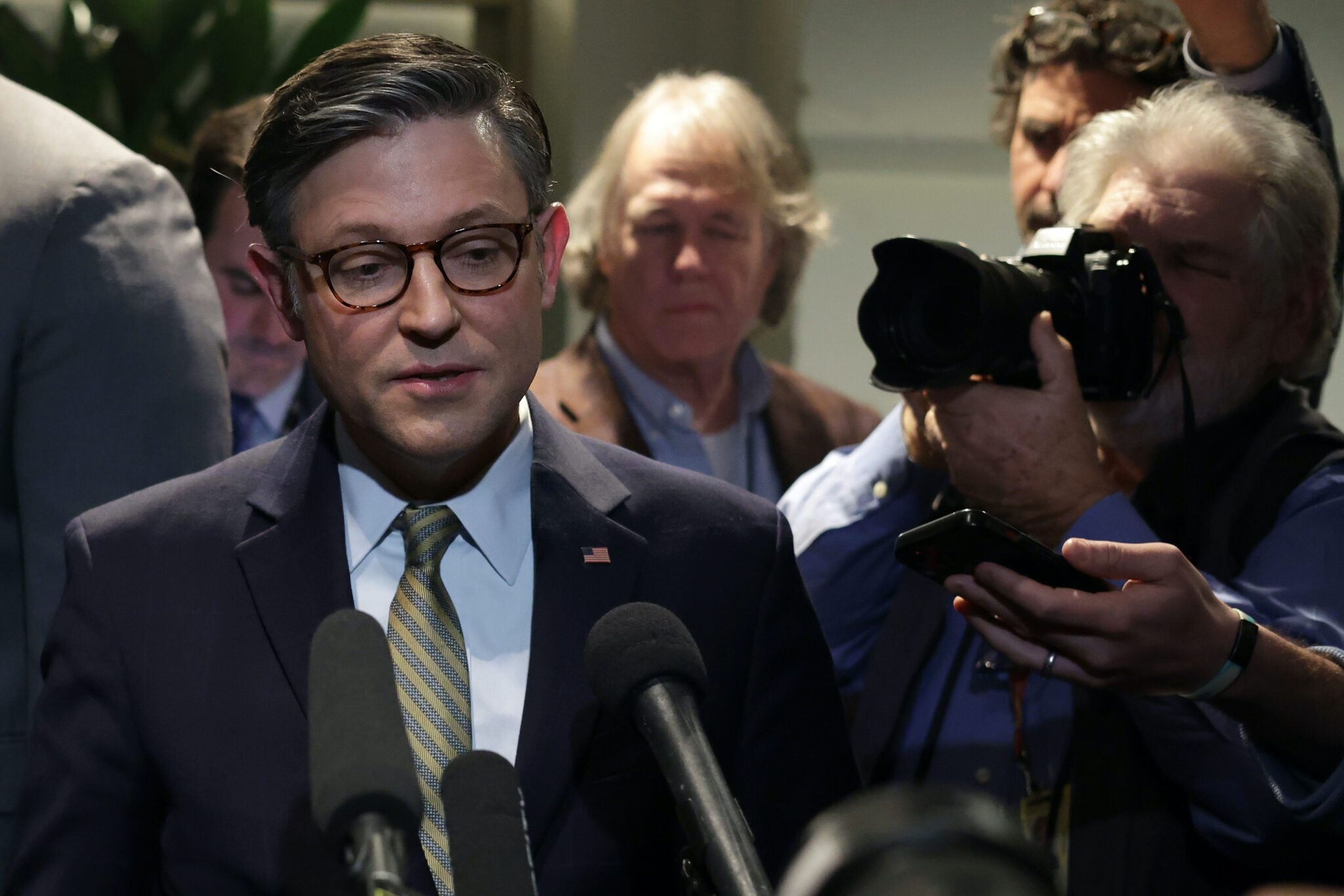

WASHINGTON — After a tumultuous 48 hours, Congress finally approved a stopgap spending bill early Saturday, preventing a government shutdown and offering a glimpse into the potential dynamics of President-elect Donald Trump’s second term. The short-term bill, the third version introduced this week, provides funding until mid-March, allowing lawmakers time to negotiate the twelve full-year government funding measures. It also allocates approximately $100 billion for natural disaster relief. Although the Senate’s passage came after the midnight shutdown deadline, Deputy White House Press Secretary Emilie Simons announced on X that government agencies would maintain normal operations. The House approved the bill Friday evening with a 366-34 vote (one Democrat voting “present”), and the Senate followed with an 85-11 vote shortly after midnight Saturday. President Biden signed the bill Saturday morning.
The legislation notably omits any measures to raise or suspend the debt limit, defying Trump’s demands. This issue will require congressional action next year, with Republicans controlling the House, Senate, and the White House. The 118-page bill extends programs within the five-year farm bill until September, granting additional time for negotiations, despite being over a year behind schedule. It also includes the first cost-of-living salary adjustment for members of Congress since 2009, raising their annual pay from $174,000 to a maximum of $180,600. A provision to allow year-round sales of E15 blended gasoline nationwide, previously considered, was excluded from the final version.
The White House voiced its support for the bill during the House vote. Press Secretary Karine Jean-Pierre stated that while it lacked some desired elements, it included requested disaster relief, prevented accelerated tax cuts for billionaires, and ensured continued government operations. She emphasized the bill’s importance in maintaining essential services for Americans, including Social Security payments and veteran benefits, and providing aid to hurricane-affected communities.
House Appropriations Chairman Tom Cole (R-Okla.) championed the bill during floor debate, highlighting its role in averting a shutdown, providing disaster aid, and offering economic support to farmers. He emphasized Congress’s responsibility to maintain government operations. Conversely, Representative Rosa DeLauro (D-Conn.), ranking member on the Appropriations Committee, opposed the bill, criticizing Republicans for abandoning the original bipartisan version. She expressed concern over the influence of Elon Musk, a close Trump ally, on the legislative process, questioning who was ultimately in charge.
Initially, Democrats and Republicans had reached a bipartisan agreement earlier in the week encompassing government funding, disaster aid, farm bill extensions, healthcare program extensions, and various other items. However, President-elect Trump intervened, blocking House GOP leaders from bringing this agreement to a vote. Both Trump and Musk opposed certain provisions in the original bill, and Trump insisted on addressing the debt limit immediately instead of during his next term.
A previous GOP-only stopgap bill, introduced Thursday night, failed with a 174-235 vote, garnering opposition from 38 Republicans. This bill included a two-year debt limit suspension, which was removed from the final version. Speaker Mike Johnson (R-La.) asserted Republican unity behind the final plan before the Friday vote. Despite this claim, 34 House Republicans ultimately voted against the bill, while no Democrats voted against it.
The failure to reach a spending agreement before the Friday midnight deadline would have resulted in a partial government shutdown at the start of the holiday season. While essential functions would have continued, federal workers and U.S. troops would have faced delayed paychecks. President-elect Trump used social media to frame a potential shutdown as a problem for the Biden administration, while reiterating his demand to address the debt ceiling, advocating for its elimination or extension until 2029.